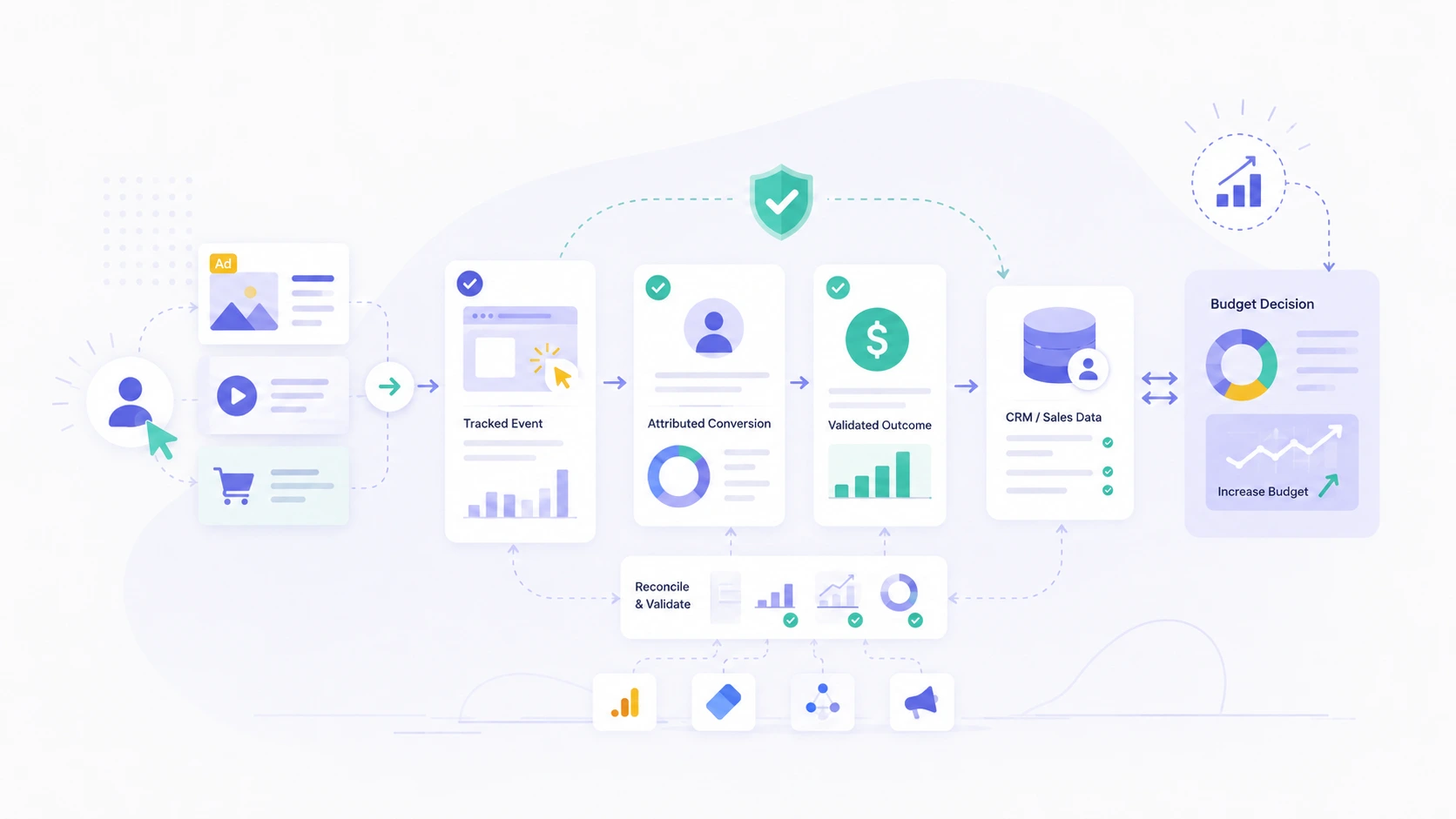
Quick answer: a local service website becomes a lead generation system when every page connects search intent, a specific offer, visible proof, clear calls to action and reliable tracking. Traffic alone is not the system. Measurable enquiries are.
Most service businesses treat their website like a digital brochure. It lists services, shows a few photos, adds a contact form and then waits patiently for leads to appear, because apparently hope is still a marketing plan in some industries.
A better approach is to design the website as a simple commercial path: the right person searches for a problem, lands on a page that matches the intent, understands the offer quickly, sees proof, takes action and becomes traceable inside the business.
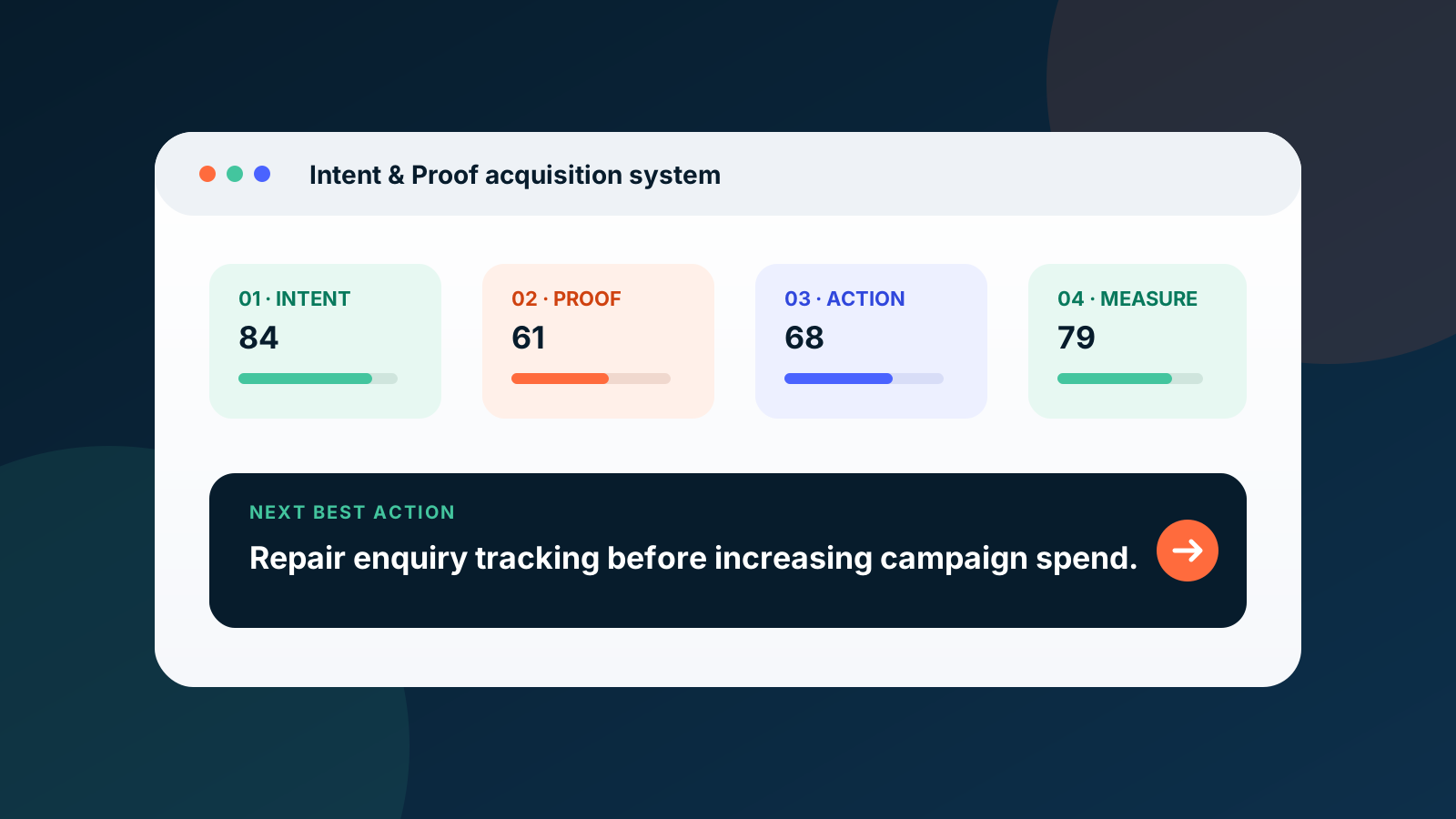
This is the core Intent & Proof model: search intent, landing page, conversion action, tracking and follow-up. Each part is simple. The advantage comes from connecting them properly.
Free Website Check
Find the leaks before buying more traffic.
Get a practical audit covering SEO structure, landing page clarity, tracking, calls to action and AI-search visibility.
Why most local service websites fail before the first click
Many local websites are not broken because they look terrible. Some are visually acceptable. They fail because they are vague, unmeasured and disconnected from how customers actually search.
A dentist, cleaning company, yacht service provider, property manager supplier or home service business does not need generic traffic. It needs qualified enquiries from people with a real need, in the right location, at the right moment.
The common failure pattern
- The homepage tries to explain everything to everyone.
- Service pages are too thin or too generic.
- Location pages repeat the same text with a different city name.
- Calls to action are weak, hidden or inconsistent.
- Google Ads traffic is sent to pages that were never built to convert.
- WhatsApp, phone and form events are not tracked properly.
- The business cannot tell which page or campaign produced each enquiry.
Intent & Proof principle: before buying more traffic, fix the path from search intent to tracked enquiry. Otherwise the business is just paying to expose more people to the same conversion leak.
The five-part lead generation system
A local service website should not be a random collection of pages. It should be a structured system with five connected layers.
1. Search intent mapping
Every important page should answer a specific commercial intent. Someone searching for “emergency dentist in Cagliari” is not in the same mindset as someone searching for “how much does dental implant treatment cost”. The page structure should reflect that difference.
| Intent type | Example query | Best page type |
|---|---|---|
| Urgent service | Emergency dentist near me | High-conversion local landing page |
| Commercial comparison | Best upholstery cleaning service in Sardinia | Service page with proof and process |
| Educational | How to remove allergens from a mattress | Guide or article with CTA |
| Brand validation | Company name reviews | About, case study or testimonial page |
2. Dedicated landing pages
Each high-value service deserves a focused page. The page should have one primary action, one clear promise and enough proof to reduce hesitation.
For example, a premium cleaning business should not send yacht upholstery, villa mattress cleaning and generic sofa cleaning traffic to the same page. Those are different buyers, different contexts and different levels of urgency.
3. Trust and proof
Local buyers need confidence. Proof can include before-and-after images, process photos, credentials, service areas, customer language, case examples, guarantees and transparent limitations.
Proof does not need to be theatrical. It needs to be specific. Generic claims like “high quality service” are basically decorative fog.
4. Conversion actions
The website should make the next step obvious. For many service businesses, the strongest conversion actions are phone, WhatsApp, contact form, audit request or quote request.
The page should repeat the action naturally in the hero, after proof, after process explanation and near the bottom. Not every visitor is ready at the same scroll depth, because apparently humans insist on behaving differently from each other.
5. Tracking and feedback
A serious lead generation system tracks the actions that matter. At minimum, the business should track form submissions, phone clicks, WhatsApp clicks, main CTA clicks and important page views.
Without tracking, the business cannot separate a working campaign from an expensive coincidence.
Local service website checklist
Use this checklist before launching SEO or ads:
- Each service page targets one clear commercial intent.
- Each important location has a useful, non-duplicate local page.
- The hero section explains who the service is for and what action to take.
- Phone, WhatsApp or form CTAs are visible above the fold.
- The page includes proof: photos, process, testimonials or case examples.
- Google Analytics or equivalent tracking records key conversion actions.
- Google Ads traffic does not land on generic pages.
- FAQ sections answer real objections and search questions.
- Internal links connect guides, services, sectors and case studies.
- The page is readable in HTML and not dependent on hidden JavaScript content.
This checklist is simple because the fundamentals are simple. The hard part is execution across many pages without slowly turning the site into a drawer full of abandoned experiments.
FAQ
What is a lead generation website?
A lead generation website is designed to turn visitors into measurable enquiries. It connects targeted traffic, persuasive landing pages, clear calls to action and tracking.
Do local service businesses need a blog?
A blog is useful when it supports commercial pages with educational content, internal links and topical authority. Random articles are less useful. Structured guides are better.
Should Google Ads traffic go to the homepage?
Usually no. Google Ads traffic should go to a page that matches the search intent and offers a clear conversion action. A generic homepage often leaks paid traffic.
How does AI search change local SEO?
AI search increases the value of clear, structured, answer-ready content. Pages should include direct answers, FAQ blocks, semantic headings, visible dates, schema where appropriate and specific examples.